



By Gaspari Nutrition | Bodybuilding History
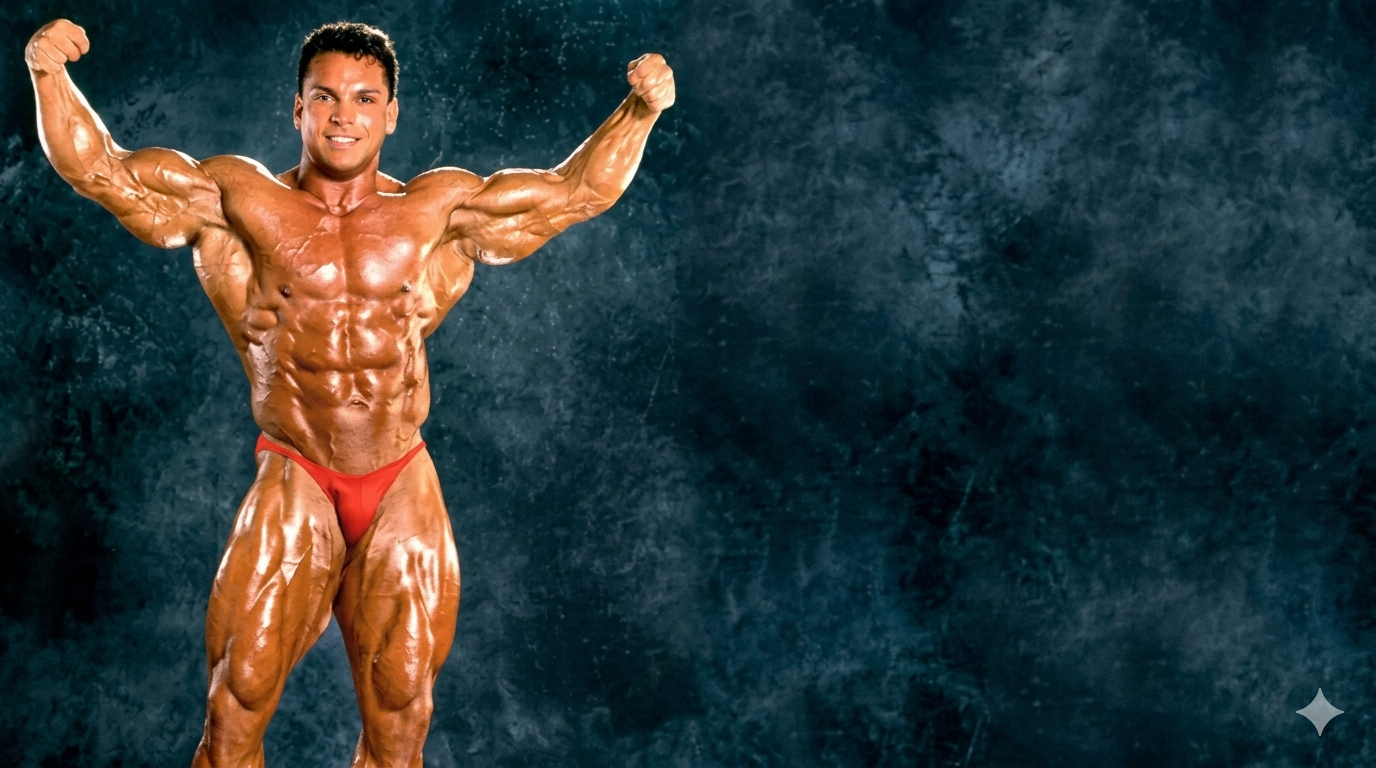
In the bodybuilding world of the late 1980s, the giants ruled the stage. Lee Haney, Mike Christian, Berry de Mey, Gary Strydom. All of them were larger than Rich Gaspari. All of them had more pure mass. And all of them had to share the stage with a man nicknamed The Dragon Slayer because he refused to be outworked, no matter how big the opponent. Gaspari finished second at the Mr. Olympia three years in a row, from 1986 through 1988, and then won the inaugural Arnold Classic in 1989, defeating a field that included some of the most established veterans in the sport. He did not do it by getting bigger. He did it by getting harder, leaner, and more conditioned than anyone thought was possible.
This is the playbook he used.
Where the Nickname Came From
The Dragon Slayer was the man who took on the giants and refused to back down. Standing five feet eight inches and competing at a stage weight of around 225 to 230 pounds, Gaspari was rarely the largest bodybuilder in the lineup. What he brought instead was a level of muscular detail and dryness that the bigger competitors could not match. He pioneered striated glutes in competition, a level of conditioning that had not been seen on a Mr. Olympia stage before. The nickname stuck because it described what he actually did. He slayed the dragons of the era through preparation, not size.
Pillar #1: Conditioning Above All Else
In the 1980s, conditioning was a tiebreaker, not the main event. Most pro bodybuilders showed up at twelve to fifteen percent body fat on stage. Gaspari showed up significantly leaner, with paper-thin skin, fully visible glutes, and striations across muscle groups that competitors could not display.
The lesson for modern lifters is the same. You cannot always be the biggest, but you can almost always be the leanest. Conditioning is a controllable variable. Diet discipline, cardio, and patience produce a level of definition that no amount of size will replace.
Pillar #2: Outwork the Competition in Volume and Intensity
Gaspari's training philosophy was simple. If a competitor did twenty sets, he did thirty. If they did thirty minutes of cardio, he did sixty. The work ethic that defined his career was not built on talent. It was built on the refusal to lose to anyone who outworked him. He could control intensity and volume. He could not control genetics. So he focused entirely on what was within his control.
This does not mean every lifter should train ninety minutes a day, six days a week. It means that effort is not a fixed quantity. The lifter willing to push harder, stay longer, and recover smarter than their peers will outpace them over time, even at lower training volumes than Gaspari himself used.
Pillar #3: Posing as a Trained Skill
Conditioning that does not show up on stage is wasted. Gaspari was known as one of the best posers of his era, treating posing practice as a separate workout discipline. He held mandatory poses for extended periods to build the muscular endurance required to display the physique under contest conditions.
Modern lifters who never compete still benefit from this principle. Holding contractions, practicing static poses, and learning to display the physique trains the muscle in a way that pure lifting does not. The lifters who look the most impressive are not always the ones with the most mass. They are the ones who can present what they have.
Pillar #4: Mental Toughness as a Trainable Skill
Three consecutive runner-up finishes at the Mr. Olympia could have ended a career. For most competitors, it would have. Gaspari instead won the first Arnold Classic the following year, beating veterans like Robby Robinson and Samir Bannout, the 1983 Mr. Olympia champion. Mental resilience under repeated pressure is not a personality trait some are born with. It is a skill built through repeated exposure to setbacks and the discipline to keep showing up regardless of outcome.
The lifters who make decade-long progress are the ones who treat setbacks as data rather than as evidence to quit.
What Modern Lifters Can Take From The Dragon Slayer
You may not be standing on a Mr. Olympia stage. The principles still apply.
Train the variables you control. Effort, conditioning, consistency, and recovery are within your hands. Genetics and circumstance are not.
Build a physique that shows up. Mass without conditioning is invisible. The lifter with eighty percent of someone else's size and twice the leanness will turn more heads.
Treat work ethic as a competitive advantage. Most people will train hard for a few weeks. The ones who train hard for a few decades win.
Use setbacks as fuel. The 1989 Arnold Classic was won by a man who had finished second at the Olympia three times. Quitting was an option. He did not take it.
The Legacy Lives On
Rich Gaspari's competitive career ended decades ago, but the principles that built it apply just as cleanly to a lifter walking into the gym on a Tuesday night. Outwork the room. Stay disciplined when no one is watching. Earn the level of conditioning that turns a body into a physique. That is how you slay your own dragons.
Frequently Asked Questions
Why is Rich Gaspari called The Dragon Slayer?
Rich Gaspari earned the nickname "The Dragon Slayer" because he competed against significantly larger bodybuilders during the 1980s and consistently outperformed expectations through superior conditioning rather than size. Standing at five feet eight inches and weighing around 225 to 230 pounds on stage, he was rarely the largest competitor in any lineup, but his unmatched muscular definition and work ethic allowed him to defeat opponents who outweighed him. The nickname reflects his pattern of taking on the "giants" of the sport and winning through preparation and grit.
What were Rich Gaspari's biggest bodybuilding accomplishments?
Rich Gaspari placed second at the Mr. Olympia three consecutive years from 1986 through 1988, finishing as runner-up to seven-time Mr. Olympia Lee Haney. In 1989, he won the inaugural Arnold Classic, becoming the first-ever champion of what is now one of bodybuilding's most prestigious competitions. He was also the first IFBB pro to display striated glutes on stage, pioneering a new standard for conditioning that influenced every generation of bodybuilders who followed him.
How did Rich Gaspari's training differ from other bodybuilders of his era?
Gaspari trained with significantly higher volume and intensity than most of his competitors during the 1980s. He frequently performed thirty or more sets per body part and added sixty minutes of cardio when other competitors were doing thirty. He also placed unusual emphasis on posing practice as a trainable skill, treating it as a separate workout discipline. His philosophy centered on outworking opponents in every controllable variable, since he could not match their genetic size advantages.
What can modern lifters learn from Rich Gaspari's career?
The most transferable lessons are that conditioning is a controllable variable, work ethic compounds over time, and setbacks are not endings. Modern lifters who focus on getting leaner and harder rather than just bigger often produce more visually impressive physiques. Those who treat training as a long-term commitment rather than a short-term project consistently outperform peers with better starting genetics. And lifters who use disappointing outcomes as fuel for the next training cycle build careers and physiques that last decades.
Train Like a Champion
The Dragon Slayer's playbook still works. Pair the work ethic with the right nutrition and supplementation to give every session your full effort. Lock in your focus with SuperPump Aggression, support recovery during demanding sessions with AminoLast, or explore the full Gaspari Nutrition lineup built on the same standard that produced the physique you read about above.
Sources: Rich Gaspari competition record per IFBB and Arnold Sports Festival historical archives. Mr. Olympia results 1986 through 1988. Arnold Classic 1989 results.


Share:
Built on Science Since 1998: The Gaspari Nutrition Standard
Best Creatine for Women: Benefits, Myths, and How to Use It