


By Gaspari Nutrition | Training Form
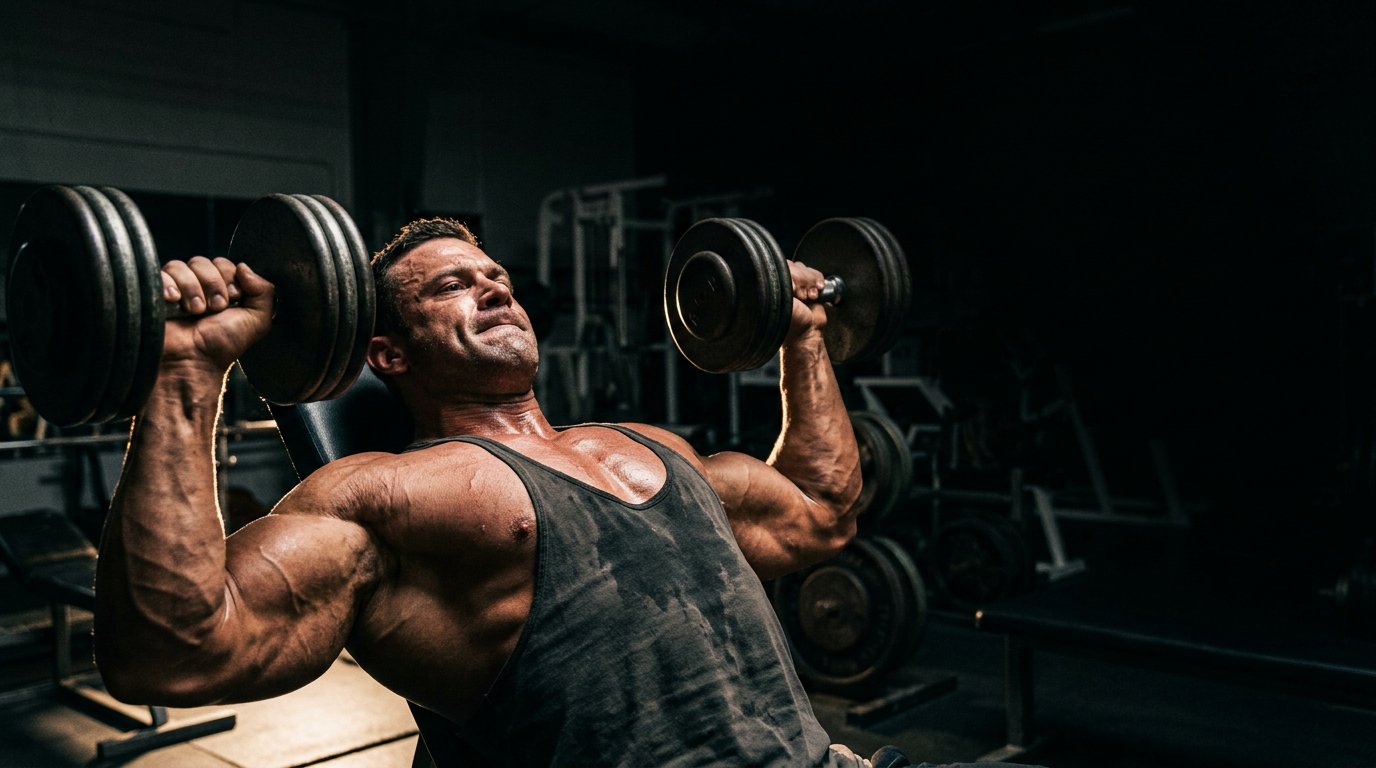
The incline dumbbell press is the single best tool for building a thick, full upper chest. It is also one of the most poorly executed exercises in the gym. Lifters bounce dumbbells off their shoulders, clank them together at the top, and lock out their elbows on every rep. The result is a movement that looks like an incline press but trains the upper chest about as well as a stretching routine. Rich Gaspari, who built one of the most striking chests of the Golden Era, has identified the mistakes that quietly erase upper chest gains. Fix them and the muscle responds quickly.
Why the Incline Dumbbell Press Is the Upper Chest Builder
The clavicular head of the pectoralis major, what most lifters call the upper chest, is best activated when the arms press at an angle above the torso. A flat bench press loads the entire chest but emphasizes the larger sternal head. The incline press, set somewhere between thirty and forty-five degrees, shifts the load to the upper fibers. Dumbbells offer an additional advantage over a barbell. They allow each arm to move independently, which corrects strength imbalances and enables a deeper stretch at the bottom of the rep.
When done correctly, the incline dumbbell press is unmatched for upper chest development. When done incorrectly, it builds shoulders, triceps, and ego.
Mistake #1: Clanking the Dumbbells at the Top
The most common error is bringing the dumbbells together and tapping them at the top of every rep. It feels satisfying. It also takes the tension off the upper chest. When the dumbbells touch and the arms lock out, the load transfers from muscle to bone and the chest stops working.
The fix: Stop the dumbbells about six inches apart at the top of the rep. Keep the elbows slightly bent. The chest should remain under tension throughout the entire range.
Mistake #2: Bouncing the Weight Off the Shoulders at the Bottom
Lowering the dumbbells too quickly and using the rebound off the shoulders or chest to drive the next rep is a way to lift heavier weight while training the muscle less. The stretch position is where the upper chest does the most work. Skipping it skips the most productive part of the rep.
The fix: Lower the dumbbells under control over two to three seconds. Feel a deep stretch in the upper chest at the bottom. Pause for a half-second before pressing back up.
Mistake #3: Setting the Bench Too High
A bench angle higher than forty-five degrees turns the incline press into a shoulder press. The front delts take over and the chest barely participates. Lifters who chase higher angles thinking it builds more upper chest are actually training a different muscle entirely.
The fix: Set the bench between thirty and forty degrees. This range hits the upper chest hard while keeping shoulder involvement secondary.
Mistake #4: Locking Out the Elbows
Driving the dumbbells to full lockout at the top removes tension from the chest, just like clanking them together. The locked-out position rests the muscle and shifts load to the joints.
The fix: Stop just short of full lockout. Keep a slight bend in the elbows so the chest stays loaded from rep one through rep twelve.
Mistake #5: Flaring the Elbows at Ninety Degrees
Bench-style flared elbows, where the upper arm sits perpendicular to the torso, place excessive stress on the shoulder joint and reduce chest activation. It is also a fast track to a rotator cuff issue.
The fix: Tuck the elbows to roughly sixty to seventy-five degrees from the torso. This protects the shoulder and improves the stretch and contraction of the upper chest.
How to Program the Incline Dumbbell Press
Place the incline dumbbell press first or second in your chest workout, when energy and focus are highest. Three to four working sets of eight to twelve reps with strict form is a productive range for hypertrophy. The weight should be heavy enough that the last two reps are difficult but achievable without breaking form.
Build the Chest That Stands Out
Rich Gaspari's upper chest was one of the visual markers that separated him from his competition. The dumbbells did not build it. The way he used them did. Apply these five fixes to your next chest workout and let the muscle do the work it was designed to do.
Frequently Asked Questions
What is the best incline angle for the dumbbell press to target the upper chest?
The optimal incline angle for upper chest activation is between thirty and forty degrees. Angles below thirty degrees shift the load toward the middle chest, while angles above forty-five degrees recruit the front deltoids and turn the movement into a shoulder press. EMG research on bench angle and chest activation supports thirty to forty-five degrees as the range that maximizes upper pec involvement while minimizing shoulder takeover. Most adjustable benches have a setting at thirty or forty-five degrees that works well.
Should I touch the dumbbells together at the top of an incline press?
No. Touching or clanking the dumbbells together at the top of the rep removes tension from the upper chest by transferring load to the locked-out elbows and shoulder joints. Stop the dumbbells about six inches apart at the top with a slight bend in the elbows to keep the upper chest under continuous tension. This single adjustment significantly increases time under tension and improves hypertrophy stimulus without changing the load or rep count.
How heavy should I go on the incline dumbbell press?
Use a weight that allows you to complete eight to twelve reps with strict form, where the last two reps are difficult but achievable without bouncing the weight or breaking technique. If you cannot lower the dumbbells under control or maintain proper elbow positioning, the weight is too heavy. Most lifters make faster upper chest progress by reducing the load by ten to twenty percent and emphasizing the stretch and squeeze of every rep over moving the most weight possible.
How many sets of incline dumbbell press should I do per workout?
Three to four working sets of eight to twelve reps is a productive range for hypertrophy when the incline dumbbell press is your primary or secondary chest movement. If it is the only chest exercise in your session, four to five sets is appropriate. Total chest training volume of twelve to twenty hard sets per week, spread across two sessions, supports consistent upper chest growth for most natural lifters.
Train the Chest That Turns Heads
Better form turns ordinary sets into growth-producing reps. Pair clean technique with the right pre-workout and recovery support to make every chest day count. Lock in your focus with SuperPump Aggression, support muscle recovery between sets with AminoLast, or explore the full lineup of pre-workouts and recovery supplements built for serious training.
Sources: Rich Gaspari training instruction. Research on bench angle and pectoral activation (Trebs et al., Journal of Strength and Conditioning Research, 2010). Research on time under tension and hypertrophy (Burd et al., Journal of Physiology, 2012).



Share:
Intra-Workout Nutrition: Why Recovery Starts Before You Leave the Gym
Built on Science Since 1998: The Gaspari Nutrition Standard