



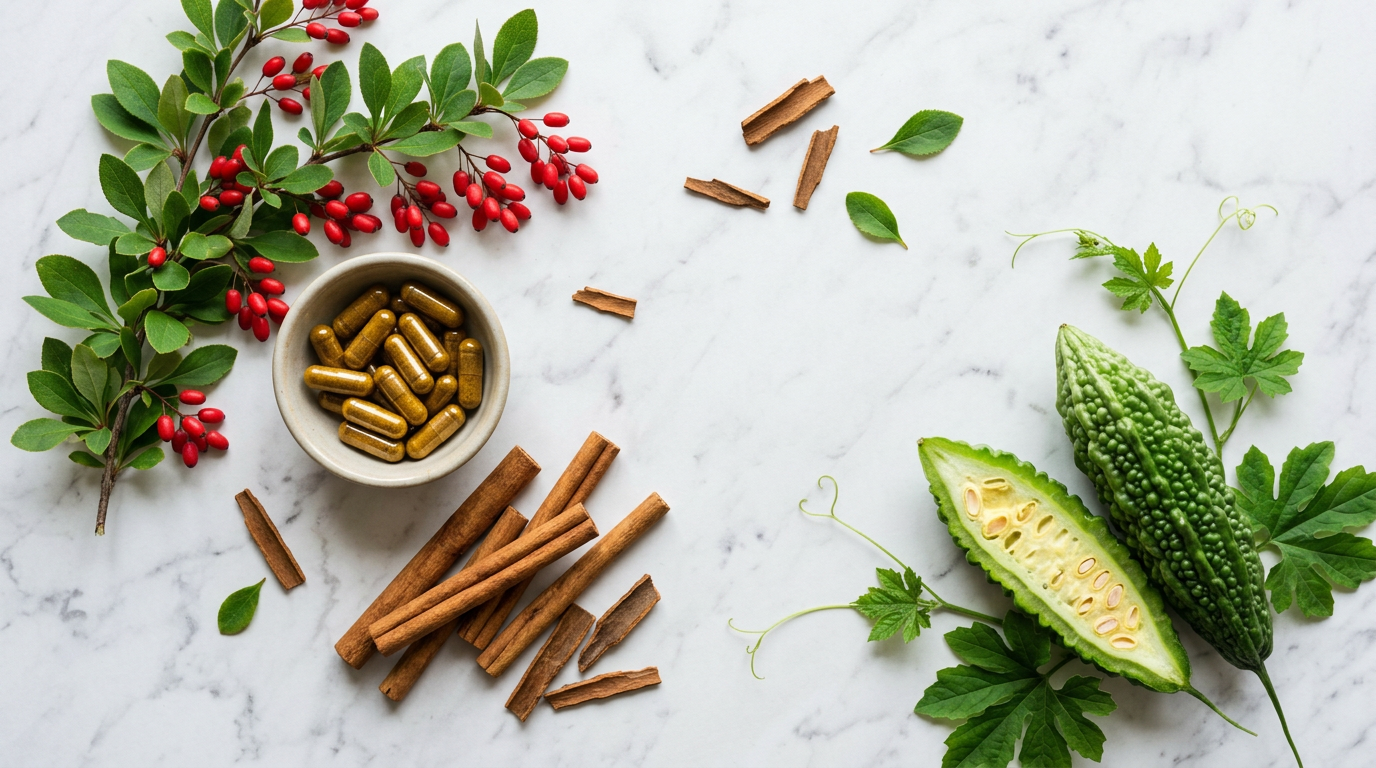
GLP-1 medications like Ozempic and Wegovy have transformed weight management for millions of people. They've also created a massive conversation around metabolic health that extends well beyond prescription drugs. With costs exceeding $1,000 per month and ongoing supply constraints, plenty of people are asking a reasonable question: are there natural compounds that support blood sugar regulation and metabolic function?
The answer is yes, with important caveats. Natural supplements don't replicate the potency of injectable GLP-1 drugs. But several ingredients have legitimate clinical evidence behind them, and when combined strategically, they can meaningfully support blood sugar management and body composition goals.
Key Takeaways
- Berberine, GDAs, and chromium are among the most studied natural compounds for blood sugar support.
- Glucose disposal agents (GDAs) enhance insulin sensitivity and help shuttle carbohydrates into muscle rather than fat.
- Natural supplements support metabolic health but do not replace prescription GLP-1 medications.
How GLP-1 Medications Work (and Why People Want Alternatives)
GLP-1 (glucagon-like peptide-1) is a hormone your body produces naturally after eating. It signals insulin release, slows gastric emptying, and suppresses appetite. Drugs like semaglutide amplify this effect dramatically.
The results are real. But so are the barriers: high cost, gastrointestinal side effects, supply shortages, and the reality that many people lose muscle mass alongside fat. For individuals who aren't candidates for prescription GLP-1 therapy, or who want metabolic support without medication, evidence-based supplements fill a meaningful gap.
Important: If you're currently on diabetes or blood sugar medication, consult your healthcare provider before adding any supplement. Some of these ingredients can enhance medication effects and may require dose adjustments.
Berberine: The Most Studied Natural Blood Sugar Compound
Berberine is a plant alkaloid with decades of research supporting its role in blood sugar regulation. It activates AMPK (AMP-activated protein kinase), the same metabolic pathway triggered by exercise and metformin. This activation improves insulin sensitivity, supports glucose uptake into cells, and may influence gut microbiome composition.
Multiple clinical studies have demonstrated berberine's ability to support healthy fasting blood glucose and HbA1c levels. Typical dosing is 500mg taken two to three times daily with meals.
One key consideration: standard berberine has relatively low bioavailability. Dihydroberberine (the form used in Gaspari's Proven GDA as GlucoVantage) absorbs significantly better, meaning you need a smaller dose for comparable effects. For a deeper look at berberine timing and usage, check out the complete guide on when to take berberine.
Glucose Disposal Agents: The Nutrient Partitioning Edge
GDAs represent a category of supplements designed to improve how your body handles carbohydrates. Instead of glucose floating in your bloodstream and eventually being stored as fat, GDA ingredients help shuttle it into muscle cells where it's used for energy and glycogen replenishment.
This is called nutrient partitioning, and it's why GDAs are popular among athletes who eat carbohydrates strategically around training. The concept is simple: make the carbs you eat work harder for you.
Key GDA ingredients backed by research include chromium picolinate (enhances insulin receptor sensitivity), gymnema sylvestre (supports healthy blood sugar levels), bitter melon extract (contains compounds that mimic insulin's action), cinnamon extract (supports glucose transport), and banaba leaf extract (contains corosolic acid for blood sugar support).
Timing matters with GDAs. Take them 20-30 minutes before your largest carbohydrate-containing meal. This gives the ingredients time to reach effective levels before glucose enters your bloodstream.
How Natural Metabolic Support Compares to GLP-1 Drugs
Let's be straightforward. GLP-1 medications produce dramatic results because they're pharmaceutical agents operating on powerful hormonal pathways. Natural supplements operate more subtly.
Where supplements shine is in supporting overall metabolic health without the side effects, at a fraction of the cost, with additive benefits for body composition and athletic performance. They're tools for optimization, not clinical interventions.
For someone managing body composition alongside a training program, a stack that includes a GDA around carb-heavy meals, berberine throughout the day, and L-Carnitine before cardio covers multiple metabolic pathways simultaneously. If you're building out a full body composition protocol, the complete fat burner stack guide breaks down exactly how to layer these products by time of day.
Building a Natural Metabolic Support Stack
Here's how to structure it throughout your day:
Morning with breakfast: Berberine (or Proven GDA if your first meal is carb-heavy).
Around your largest carb meal or post-workout meal: Proven GDA taken 20-30 minutes beforehand.
Before training or cardio: L-Carnitine to support fat oxidation during exercise.
If running a full body composition program: Add a thermogenic like DTN8 in the morning for appetite management and energy.
The core principle is covering multiple metabolic pathways instead of relying on a single ingredient. Blood sugar management, fat oxidation, thermogenesis, and protein intake all work together. Supplements accelerate the process, but they don't replace the caloric deficit and consistent training that drive real results.
Frequently Asked Questions
Can I take berberine and a GDA together?
Yes. Berberine works primarily through AMPK activation while other GDA ingredients like chromium and gymnema target insulin receptor sensitivity. They're complementary, not redundant.
Will a GDA let me eat unlimited carbs?
No. GDAs optimize how your body processes carbohydrates, but they don't eliminate caloric impact. You still need to maintain appropriate calorie intake for your goals.
Are natural blood sugar supplements safe with diabetes medication?
Consult your doctor first. Some ingredients like berberine and chromium can enhance the effects of blood sugar-lowering medications, which may require dose adjustments to avoid hypoglycemia.
When should I take a glucose disposal agent?
Take it 20-30 minutes before your largest carb-containing meal. This gives the ingredients time to reach effective levels before glucose from your meal enters the bloodstream.
How long before I see results from berberine?
Most clinical studies show measurable changes in blood sugar markers within four to eight weeks of consistent daily use. Body composition changes depend on the full picture of diet and training.

Share:
The Best Supplement Stack for Building Muscle: A Complete Guide
Agmatine Sulfate: The Underrated Supplement for Pumps, Focus, and Mood